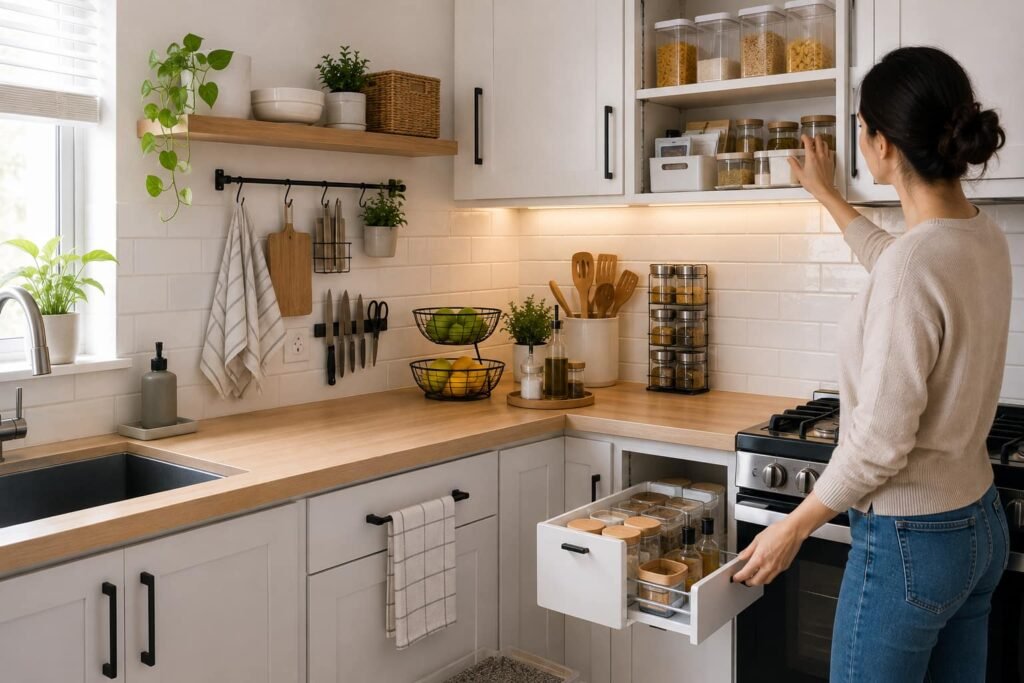
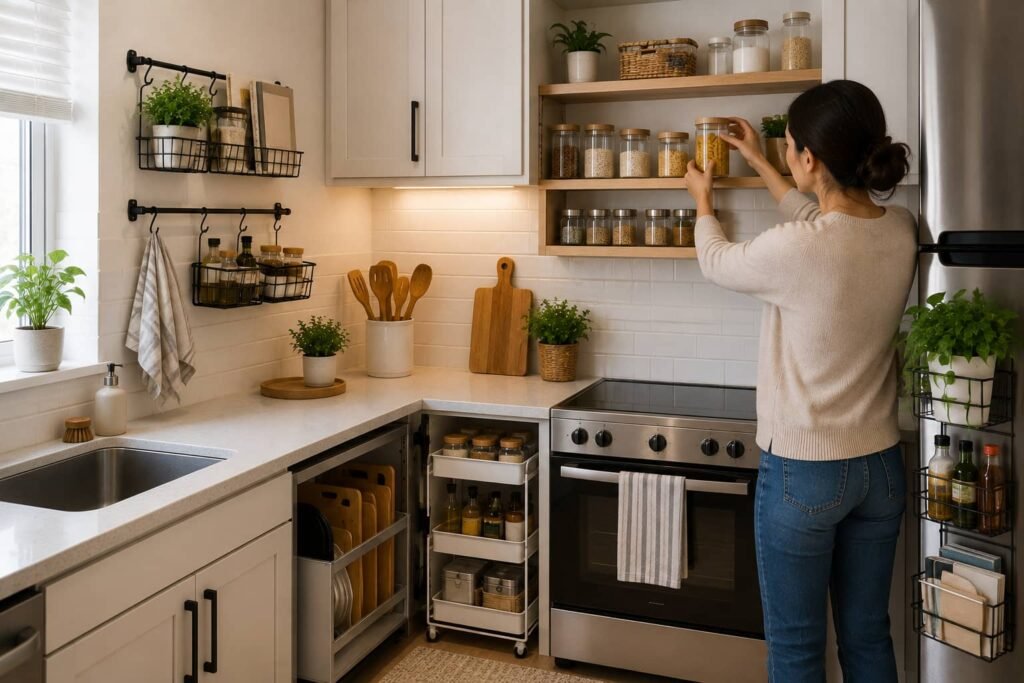
"Under cabinet storage" means two different things, and knowing which one you are solving for changes everything. Zone one is under your wall cabinets, the strip of wall above the counter, and the best move there is a mounted rail or rod that lifts tools and jars off the counter. Zone two is inside your base cabinets under the counter, including under the sink, where the best move is a pull-out or two-tier organizer that brings the dark back corners forward. Renters can do most of this with adhesive and tension, no drill required. Here are 15 ideas, sorted by which zone they fix.
First, figure out which "under cabinet" you actually mean
Search "under cabinet storage" and you get two completely different sets of advice tangled together, which is exactly why so many of these guides feel like they miss your problem. So before you buy anything, point at the space that is bugging you.
- Under your wall cabinets is the vertical strip of wall between the countertop and the bottom of your upper cabinets, the backsplash zone. This space is almost always empty air. You fix it by mounting things (rails, strips, small shelves) or hanging things from the cabinet's underside.
- Inside your base cabinets, the ones under the counter, is a cave. The problem here is not empty space, it is wasted depth: a single tall shelf where things get lost in the back. The under-sink cabinet is the worst offender because the plumbing eats the middle of it. You fix this zone with pull-outs, tiers, and tension rods.
Most of the ideas below work in one zone or the other, not both. I have labeled each one so you are not guessing. I have also flagged whether it is renter-safe (no drilling, comes off clean) or permanent (needs a drill or a screw), because that is the detail most lists leave out and it is the one that decides whether you can even do it.
For the bigger picture on squeezing a tight kitchen, this fits inside my full guide to small kitchen organization ideas.
Zone 1: Under your wall cabinets (the backsplash strip)
This is the highest-value real estate in a small kitchen because it is right at eye level and right where you work. Everything here is about getting daily-use items off the counter without losing sight of them.
1. A mounted rail system (permanent, or renter-safe with adhesive). A horizontal rail with S-hooks is the workhorse of this zone. Hang ladles, measuring cups, a small colander, oven mitts, even a mug or two. Screw-mounted rails are sturdier and hold more weight. If you rent, look for rails sold with a strong adhesive mounting option instead of screws, and keep the load light.
2. A magnetic knife strip (renter-safe versions exist). This frees up counter block space and keeps blades visible. You can buy them screw-mounted or as no-drill adhesive strips that stick to tile, granite, or drywall. The adhesive kind usually asks you to let it cure for about 24 hours before you load it, so resist testing it early.
3. Under-shelf hanging baskets (renter-safe). These slide onto the bottom of a cabinet shelf and hang a wire basket in the dead space below it. Good for foil, wrap, or a stash of tea. No tools, nothing permanent, and they lift off when you move.
4. Under-shelf stemware holders (renter-safe). Narrow metal channels that screw or slot into the underside of a wall cabinet and hold wine glasses by the base, hanging upside down. The slot-in versions need no hardware. This is a small thing that reclaims a surprising amount of shelf.
5. Adhesive hooks for mugs and utensils (renter-safe). The most basic move on this list and still one of the best. A row of stick-on hooks under a cabinet edge turns a blank strip into a mug rail or a spot for frequently grabbed tools. Choose hooks rated for the weight you plan to hang, not the lightest ones you can find.
6. A mounted spice ledge (permanent or renter-safe). A slim shelf or gutter-style rack mounted on the backsplash keeps everyday spices at the counter instead of buried in a cabinet. Adhesive and tension-mounted versions exist for renters; screw-mounted ones hold more jars.
7. A paper towel holder mounted under the cabinet (renter-safe or permanent). Mounting the roll under a wall cabinet clears the counter entirely. Adhesive and clamp-on models avoid drilling.
Zone 2: Inside your base cabinets and under the sink
The base cabinet problem is depth. You have plenty of cubic space, but a single shelf means half of it is unreachable. The fixes here all do one job: bring the back to the front.
8. A tension rod for spray bottles (renter-safe). The single cheapest under-sink upgrade. Wedge a spring-loaded tension rod across the cabinet near the top and hang your cleaning sprays by their trigger handles. The whole cabinet floor opens up underneath. Nothing to install, nothing to remove later.
9. A two-tier under-sink organizer (renter-safe). A freestanding rack that adds a second level so you stop stacking bottles on their sides. Many are built with an L-shaped or split design specifically so they straddle the pipe. This is the one most people mean when they say "under-sink organizer."
10. Pull-out drawers or sliding shelves (usually permanent). These mount to the cabinet floor or sides and slide the whole shelf out toward you, so nothing hides in the back. The trade-off is honesty time: most quality pull-outs need a few screws to anchor the rails, which makes them a homeowner move more than a renter one. There are freestanding sliding baskets that sit in the cabinet without hardware, and those are the renter workaround.
11. A rolling caddy (renter-safe). A narrow bin on wheels that rolls out of a base cabinet. Zero installation, and it works around plumbing because you just roll it into the clear floor space. Divided ones keep cleaning supplies from tipping into each other.
12. Stackable shelf risers (renter-safe). A simple standing shelf inside a base cabinet doubles your usable levels for plates, cans, or bowls. Look for expandable ones if the cabinet is an awkward width.
13. Over-the-door cabinet organizers (renter-safe). Bins or racks that hook over the top edge of the cabinet door, using the door itself as storage. Great for sponges, gloves, and small bottles under the sink. The hook-over versions need no screws; peel-and-stick versions are also available.
14. A turntable or lazy Susan (renter-safe). A spinning tray for a base or corner cabinet so you can reach the back without unloading the front. Best for oils, sauces, and jars that otherwise get lost behind the front row.
15. Under-cabinet lighting: not storage, but it changes the whole zone
The one under-cabinet upgrade that is not about storage is lighting, and I am including it because it does more for a small kitchen than the square footage suggests. A dark counter feels cramped; a lit one feels open, and you can actually see into the storage you just built.
Under-cabinet lighting (renter-safe options exist). Stick-on LED strips or puck lights mount to the underside of a wall cabinet with adhesive, run on batteries or a rechargeable pack, and need no wiring or electrician. Battery and plug-in options are the renter-friendly route. As a rough target, task lighting reads best at a few hundred lumens per foot of counter, so do not buy the dimmest set you can find and expect it to earn its place. Hardwired lighting looks cleaner but is a permanent, professional job.
The under-sink pipe problem nobody warns you about
Here is the part most guides skip, and it is the exact thing that ruins an under-sink project. You measure the cabinet, order a two-tier organizer, and it will not fit, because the drain pipe and the P-trap run straight through the middle of the space, right where the organizer wants to stand.
I would rather you know this before you buy than after:
- Measure around the pipe, not the empty cabinet. Note where the pipe enters and how much clear floor sits on each side. A 20-inch-wide cabinet with a pipe down the center might only give you two 8-inch pockets, not one 20-inch shelf.
- Buy for the obstacle. Look specifically for organizers described as L-shaped, U-shaped, or expandable/adjustable-shelf. Those shapes exist precisely to wrap around the pipe or let you remove a shelf where the plumbing sits. A flat rectangular rack usually will not work under a sink.
- If you have a garbage disposal, measure it too. The disposal unit hangs down and steals even more of the middle. Adjustable-height shelving is your friend here.
- Leave the shutoff valves reachable. Do not wall off the little valves on the water lines. If a pipe ever leaks, you want to reach them in seconds, not dismantle a full organizer first.
None of this is complicated, but it is the difference between one confident order and a return trip. This same "measure the obstacle first" rule is why a pantry-free kitchen needs its own plan, which I cover in organizing a small kitchen with no pantry.
Renter-safe vs. permanent, at a glance
If you rent, or you just do not want to drill, here is the whole list sorted so you can skip straight to what you can actually do.
| Idea | Zone | Renter-safe (no drill)? |
|---|---|---|
| Mounted rail system | Wall cabinet | Adhesive versions yes; screw versions no |
| Magnetic knife strip | Wall cabinet | Adhesive versions yes |
| Under-shelf hanging baskets | Wall cabinet | Yes |
| Under-shelf stemware holders | Wall cabinet | Slot-in versions yes |
| Adhesive mug/utensil hooks | Wall cabinet | Yes |
| Mounted spice ledge | Wall cabinet | Adhesive/tension yes; screw no |
| Under-cabinet paper towel holder | Wall cabinet | Adhesive/clamp yes |
| Tension rod for spray bottles | Under sink | Yes |
| Two-tier under-sink organizer | Under sink | Yes |
| Pull-out drawers / sliding shelves | Base cabinet | Freestanding yes; mounted no |
| Rolling caddy | Base cabinet | Yes |
| Stackable shelf risers | Base cabinet | Yes |
| Over-the-door organizers | Base cabinet | Hook-over versions yes |
| Turntable / lazy Susan | Base cabinet | Yes |
| Under-cabinet lighting | Wall cabinet | Battery/stick-on yes; hardwired no |
For a full walkthrough of the products in that "yes" column, see my guide to renter-friendly kitchen storage products.
One honest caveat on the whole "renter-safe" idea: adhesive is only as good as the surface and the weight. It grips clean tile, glass, and sealed drywall well; it struggles on textured, greasy, or freshly painted surfaces. Wipe the spot down first, respect the cure time, and do not hang cast iron off a stick-on hook. Used within their limits, these come off clean and take your deposit worries with them.
FAQ
What is the difference between under cabinet and under sink storage?
Under cabinet storage usually refers to the strip under your upper wall cabinets, the backsplash zone above the counter, where you mount rails, strips, and small shelves. Under sink storage is one specific base cabinet, the one below the sink, and it needs organizers shaped to fit around the drain pipe. They are different problems with different products.
Can renters add under cabinet storage without drilling?
Yes, most of it. Adhesive rails and hooks, magnetic strips, slot-in stemware holders, tension rods, freestanding two-tier organizers, rolling caddies, and stick-on LED lighting all install with no drill and remove without damage. The only ideas that usually require drilling are mounted pull-out drawers and hardwired lighting.
Why won't my under-sink organizer fit around the pipes?
Because most flat rectangular organizers assume an empty cabinet, but the drain pipe and P-trap run through the middle of the space. Measure the clear floor on each side of the pipe before buying, and choose an L-shaped, U-shaped, or expandable organizer designed to wrap around plumbing. If you have a garbage disposal, measure that too, since it hangs down into the same area.
How much weight can adhesive under-cabinet hooks hold?
It depends entirely on the hook's rating and the surface. Buy hooks rated above the weight you plan to hang, mount them on a clean, smooth, grease-free surface, and let the adhesive cure fully before loading. Keep heavy items like cast iron on screw-mounted hardware instead.
Is under-cabinet lighting worth it in a small kitchen?
For most small kitchens, yes. Stick-on battery or plug-in LED strips need no wiring, cost little effort, and make a dark counter feel bigger and easier to work on. Aim for a few hundred lumens per foot of counter so it works as real task lighting, not just a glow.