Four things get recommended for greasy kitchen cabinets over and over: dish soap, vinegar, baking soda paste, and commercial degreasers. Dish soap and water is the safest default for most finishes and everyday buildup. Vinegar cuts grease well but can dull some painted finishes. Baking soda paste is for set-in buildup, not routine cleaning. Commercial degreasers are the strongest option and worth it for heavy, long-neglected grease, but they need a finish check first.
I put this comparison together as part of the full kitchen cleaning order on House Tweaks, after covering the basic method for sticky cabinet grease separately. This piece is about choosing between the options, not the step-by-step wipe-down itself.
What a degreaser actually needs to do
Grease near a stove isn’t just dirt sitting on a surface, it’s a thin film that has bonded to the material after repeated heating and cooling. A good degreaser breaks that bond so it lifts with a cloth instead of smearing. Everything below does that to some degree; the differences are in strength, cost, and what each one risks on the wrong surface.
Dish soap: the safe default
A few drops in warm water, applied with a soft cloth, is the method I’d start with on almost any finish. It’s cheap, it’s already in most kitchens, and it doesn’t carry the finish risks that vinegar or a commercial degreaser can. Its downside is simple: it’s not strong enough for grease that’s been sitting for months.
Vinegar: what it’s good for, and where it’s risky
Diluted white vinegar (roughly equal parts vinegar and water) cuts grease more aggressively than dish soap and is a common recommendation for exactly that reason. The catch is that vinegar is acidic, and acidic cleaners are not universally safe on painted or some wood finishes, where repeated use can dull the surface over time. Before relying on vinegar as your go-to, it’s worth confirming which cleaners are safe on your specific cabinet finish rather than assuming it’s fine everywhere.
Baking soda paste: for buildup, not daily use
A paste of baking soda and a little water, left to sit for a few minutes and then worked in gently with a soft cloth or an old toothbrush, is a mild abrasive that helps with grease that has already set into a visible layer. It’s not something to reach for on a quick weekly wipe since it takes more time and a bit of scrubbing, but for buildup that dish soap alone won’t touch, it’s a reasonable middle step before a commercial product.
Commercial degreasers: when they’re worth it
Manufacturer and independent reviews point to concentrated, water-based degreasing cleaners as the strongest option for heavy, long-neglected grease, and several are marketed specifically as safe for household surfaces when used as directed. These are worth reaching for when dish soap and baking soda paste have both been tried and the grease still won’t lift, particularly on cabinets that haven’t had a real clean in a long time. As with any stronger cleaner, check your cabinet finish first and follow the product’s own label instructions, since “commercial” doesn’t mean “safe on every surface.”
How to test a new cleaner before you commit to it
Whichever option you’re trying, especially vinegar, a commercial degreaser, or anything you haven’t used on these cabinets before, test it on a small, hidden spot first, like the inside edge of a door or the back of a cabinet frame. Give it a minute or two, then check for any dulling, discoloration or texture change before treating the whole cabinet front. This costs almost nothing in time and avoids finding out the hard way that a product didn’t agree with your finish.
Cost and effort, honestly
Dish soap is the cheapest option by a wide margin and is already in most kitchens. Vinegar and baking soda are both pantry-cheap as well, which is part of why they get recommended so often. Commercial degreasers cost more per bottle but usually need less scrubbing effort for the same result on heavy grease, which is the actual trade-off: money versus elbow grease, not one option being universally “better” than another.
A simple decision table
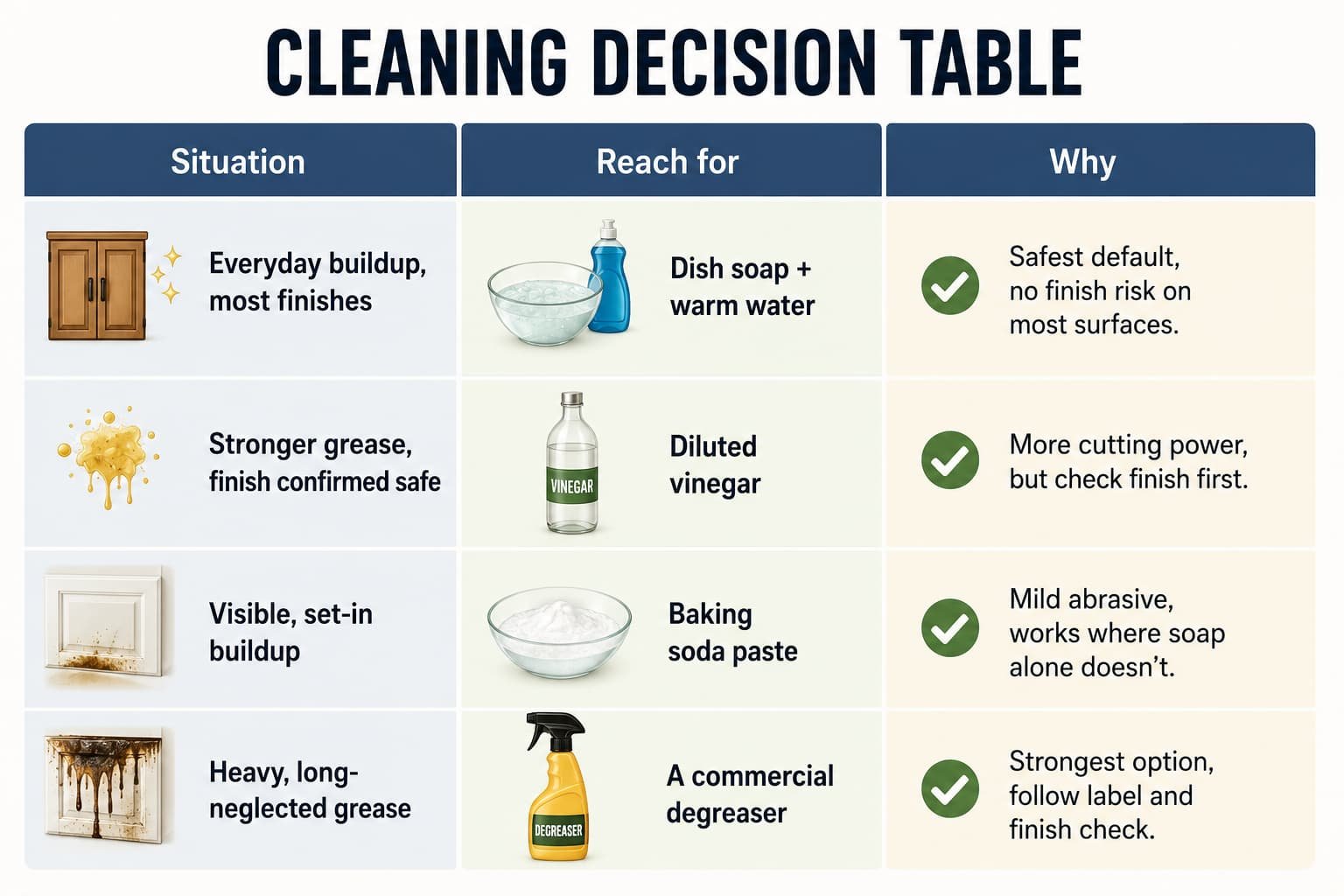
| Situation | Reach for | Why |
|---|---|---|
| Everyday buildup, most finishes | Dish soap + warm water | Safest default, no finish risk on most surfaces |
| Stronger grease, finish confirmed safe | Diluted vinegar | More cutting power, but check finish first |
| Visible, set-in buildup | Baking soda paste | Mild abrasive, works where soap alone doesn’t |
| Heavy, long-neglected grease | A commercial degreaser | Strongest option, follow label and finish check |
FAQ
What is the best degreaser for kitchen cabinets?
There isn’t one universal answer. Dish soap and warm water is the safest starting point for most finishes and everyday grease. For heavier or long-neglected buildup, a commercial degreaser or a baking soda paste does more work, but the right choice depends on your cabinet’s finish.
Is vinegar bad for kitchen cabinets?
Not universally, but it isn’t universally safe either. Vinegar is acidic and can dull some painted or wood finishes over repeated use, so it’s worth confirming your finish before making it your regular cleaner.
Do I need a commercial degreaser, or will dish soap work?
For routine grease, dish soap and water is usually enough. Commercial degreasers earn their place on heavier, longer-neglected buildup that dish soap alone won’t cut through.
Can I mix vinegar and baking soda for cabinet grease?
The two react and fizz together, which mostly just creates foam rather than adding cleaning power to either one. It’s simpler and just as effective to use them separately: baking soda paste for set-in grime, vinegar solution for cutting power where your finish allows it.
How often should I deep-degrease my kitchen cabinets?
There’s no single number that fits every kitchen, since it depends on how often you cook and what kind of cooking you do (frying and searing produce more airborne grease than boiling or baking). A weekly wipe of the cabinets nearest the stove, with a fuller degreasing pass whenever buildup becomes visible, keeps most kitchens from needing a heavy-duty clean very often.
Are natural or homemade degreasers as effective as commercial ones?
For everyday grease, dish soap and vinegar-based methods hold up well and are what several independent kitchen-focused reviewers point to as genuinely effective, not just cheap. For grease that’s been left for a long time, a commercial degreaser generally cuts through it with less scrubbing, which is where the extra cost buys back effort rather than results you couldn’t get otherwise.
Do I need different degreasers for different rooms, or does one work everywhere in the kitchen?
The same degreaser generally works across cabinet fronts, and with the finish check described above, it also covers a tile backsplash reasonably well. What changes room to room within the kitchen isn’t the cleaner itself so much as how much grease has actually settled there, since areas closest to the stove need attention more often than cabinets on the far side of the room.