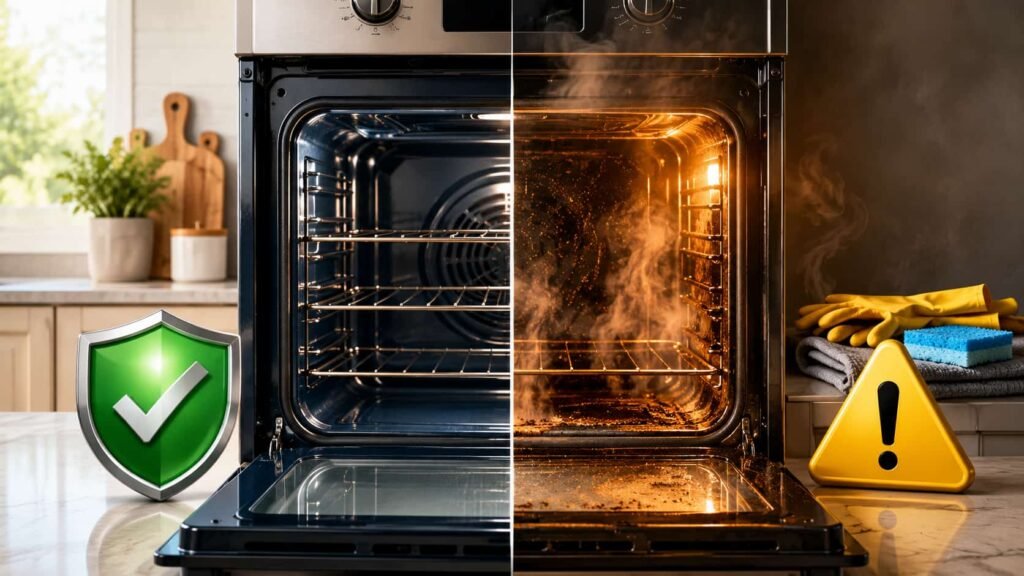
An oven interior can be cleaned by hand with a baking soda paste left on overnight, then scrubbed with a non-abrasive sponge and wiped clean, with a vinegar spray afterward to help lift any remaining residue. The racks come out and soak separately in hot, soapy water. This manual method works whether you're avoiding the self-clean cycle because of the heat, the fumes, an older unit, or a cycle that's stopped working, and it doesn't require the high heat or extended lockout time that self-clean does.
This is one part of the full kitchen deep-clean order on House Tweaks, alongside cleaning a greasy range hood filter, which is the other appliance most people put off.
Why some ovens skip self-clean
Self-clean cycles run the oven at very high temperatures for an extended period to burn off residue to ash, and that heat and the fumes it can produce are the main reasons people look for an alternative, along with concern about older units or a self-clean function that simply doesn't work anymore. None of that means the oven can't get properly clean, it just means doing it by hand instead of relying on the cycle.
What to remove first: racks and loose debris
Take out the oven racks and any loose debris (crumbs, foil scraps) before starting. Cleaning around the racks instead of lifting them out just means working around obstacles the whole time, and the racks need their own soak anyway.
The baking soda and vinegar method, step by step
- Make a paste using baking soda and a small amount of water, aiming for a spreadable consistency.
- Coat the interior surfaces with the paste, avoiding the heating elements (the exposed coil on an electric oven, or the burner and igniter area on a gas oven).
- Let it sit for several hours, or overnight for heavier buildup, so it has time to loosen baked-on residue.
- Scrub with a non-abrasive sponge or cloth, focusing on the areas with the most visible buildup.
- Spray white vinegar over any remaining paste residue. It reacts with the baking soda, which helps lift what's left and makes wiping easier.
- Wipe the interior clean with a damp cloth, going over it a second time with a dry cloth to remove any leftover film.
For lighter, more regular upkeep, a simple dish soap and warm water wipe-down handles minimal soil without needing the full paste treatment.
Ventilation while you clean
Whether you're using a baking soda paste, vinegar, or a commercial oven cleaner, open a window or run a kitchen fan while you work and while the paste sits, particularly if you have a gas oven. Baking soda and vinegar don't produce fumes to worry about on their own, but a well-ventilated space is still worth it any time you're spending an extended period with cleaning products and an appliance that's normally sealed shut.
For heavier buildup: what a commercial oven cleaner adds
If baked-on grease has been building for a long time, a commercial oven cleaner rated safe for your oven type (gas ovens and electric ovens don't always take the same products) can cut through more than baking soda alone. Use gloves and ventilate the room as the label directs, apply only to a fully cooled oven, and follow the sit time and wipe-down instructions exactly rather than leaving it longer to "make sure it works."
Cleaning the racks separately
Soak the racks in a bathtub or a large basin filled with hot water, dish soap, and, for tougher buildup, a little baking soda. An hour or two of soaking loosens most residue enough that it scrubs off with a nylon brush; heavily neglected racks may need a longer soak or a second round.
A schedule that keeps this from becoming a big job again
A quick wipe of spills as soon as the oven has cooled, rather than letting them bake on repeatedly, is the single biggest thing that keeps this from turning into an overnight paste job every time. Treat the full manual clean as an occasional deep clean, not something that has to happen weekly.
FAQ
Can I clean my oven without running the self-clean cycle at all? Yes. A baking soda paste left on for several hours or overnight, then scrubbed and wiped, followed by a vinegar rinse for any leftover residue, cleans an oven interior thoroughly without the self-clean cycle's heat or fumes.
Is baking soda safe to use in a gas oven? Yes, as long as the paste is kept off the burner and igniter area rather than spread across every surface. Avoid soaking any part of the ignition system in cleaning paste or liquid.
How long should I leave baking soda paste in the oven? Several hours at minimum, and overnight for heavier, longer-neglected buildup. The paste needs time sitting on the residue to loosen it before scrubbing does the rest of the work.
Do oven racks need to be cleaned separately from the oven interior? Yes. Racks are easier to clean out of the oven, soaking in hot soapy water in a tub or large basin, than they are while still inside, and removing them first also gives you clear access to the interior surfaces.
Is the self-clean cycle actually worse than manual cleaning? That's a separate question from how to clean without it, and it depends on the oven and how the cycle is used. What's true regardless is that the manual baking soda method described here gets an oven genuinely clean without the high heat or extended cycle time self-clean requires, which is exactly why it's a reasonable choice for anyone who'd rather avoid that cycle for any reason.
Can I use this method on a gas oven and an electric oven the same way? Yes, with one distinction: keep the baking soda paste away from the burner and igniter area on a gas oven, and away from the exposed heating element on an electric oven. The rest of the method, the paste, the sit time, the vinegar rinse, and the rack soak, works the same way on both.
Does this method remove burnt smells as well as visible grease? It helps with both, since the baking soda and vinegar combination lifts the residue that's usually the source of a lingering burnt smell, not just the visible stains. A stubborn smell that persists after a full clean is worth a look for spilled food that fell into the space below the oven floor or into a broiler drawer, which a standard interior wipe-down doesn't reach.
How often does an oven actually need this kind of manual clean? It depends heavily on how often you bake or roast versus how often spills happen, so there's no single fixed interval. Wiping up spills as soon as the oven cools after they happen is the habit that matters most; the fuller paste-based clean described here is realistically an occasional task rather than a weekly one for most households.