Sticky grease on the cabinets near your stove usually comes off with warm water, a few drops of dish soap, and a soft microfiber cloth, wiped in the direction of the grain and dried immediately so water doesn’t sit on the surface. That handles most everyday buildup on most finishes. If it doesn’t cut through after one honest attempt, the next move is to confirm what your cabinets are actually made of before reaching for anything stronger, since not every finish tolerates the same cleaners.
This is part of the full kitchen deep-clean order I put together for House Tweaks, and this piece covers just the cabinet-grease job itself.
Why sticky, not just dusty, needs a different approach
Dust wipes off. Sticky residue near a stove is airborne cooking grease that has settled and set, and it grabs onto whatever touches it, including a dry paper towel that just smears it around. That’s the whole reason a plain dry wipe never seems to finish the job: it’s dragging grease sideways instead of lifting it.
The safe default method
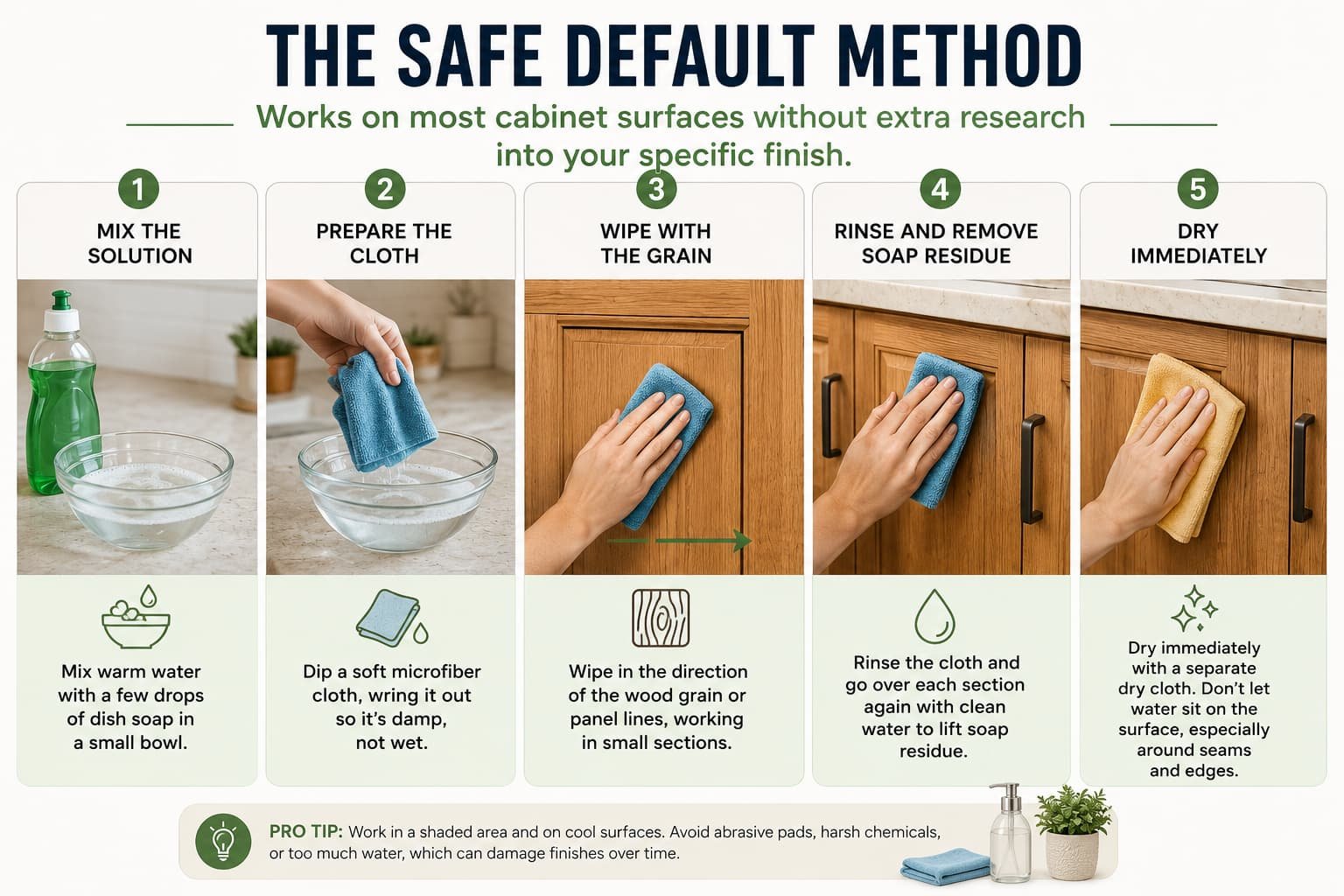
This works on most cabinet surfaces without extra research into your specific finish:
- Mix warm water with a few drops of dish soap in a small bowl.
- Dip a soft microfiber cloth, wring it out so it’s damp, not wet.
- Wipe in the direction of the wood grain or panel lines, working in small sections.
- Rinse the cloth and go over each section again with clean water to lift soap residue.
- Dry immediately with a separate dry cloth. Don’t let water sit on the surface, especially around seams and edges.
Skip anything abrasive. Steel wool, scouring pads and stiff-bristled brushes can scratch a finish that a soft cloth would have handled just fine.
What you need for this, and what to skip
A soft microfiber cloth, warm water and dish soap cover the job for most cabinets. That’s genuinely it for a first attempt. Skip steel wool, scouring pads, melamine “magic eraser” style sponges, and anything labeled abrasive until you’ve confirmed your finish can handle it, since those are the tools most likely to leave a scratch or a dull patch that outlasts the grease it removed.
Common mistakes that make it worse
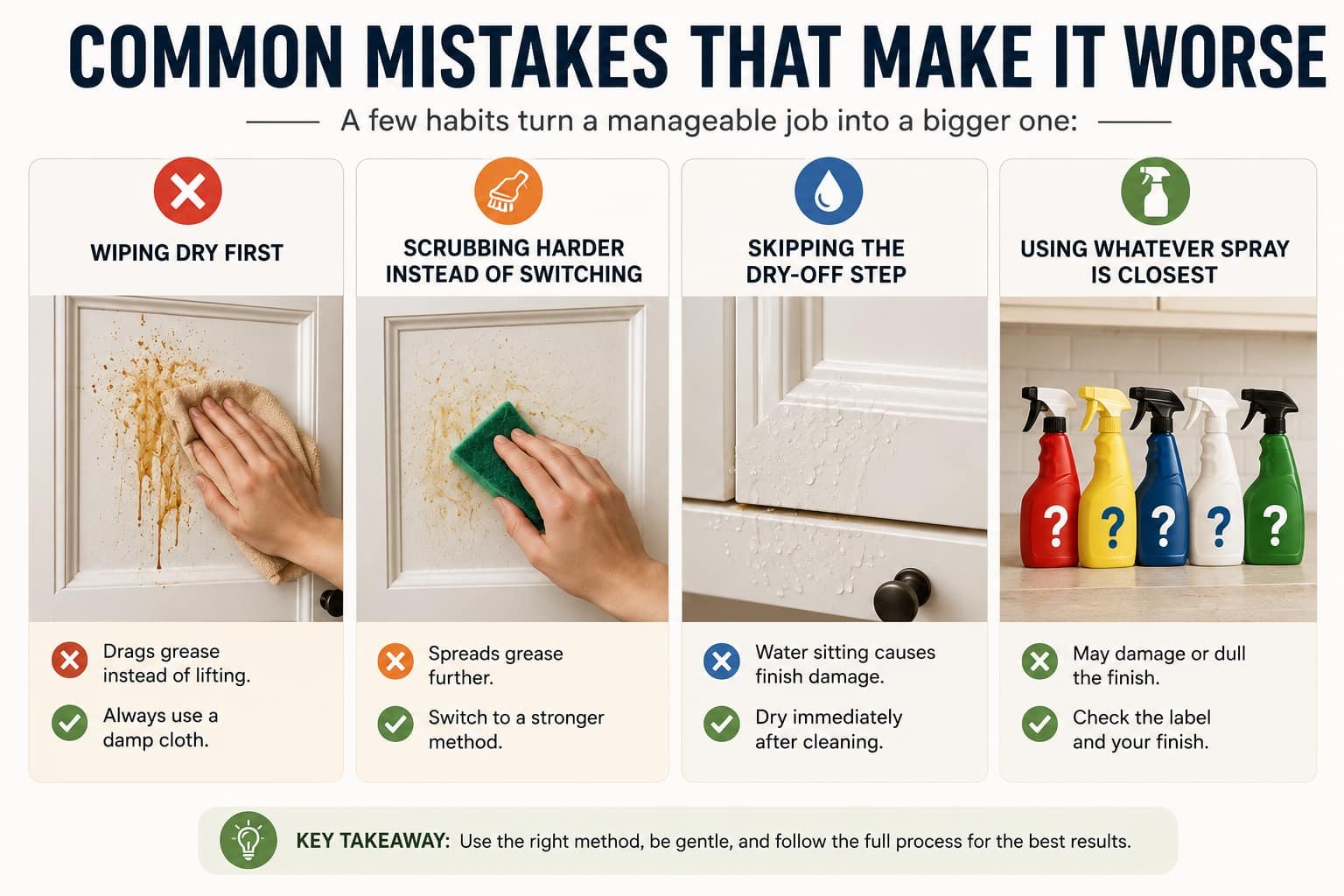
A few habits turn a manageable job into a bigger one:
- Wiping dry first. A dry cloth on sticky grease just drags it sideways instead of lifting it. Always go in with a damp cloth.
- Scrubbing harder instead of switching methods. If gentle wiping isn’t working after a real attempt, pushing harder on the same cloth usually just spreads the grease further rather than removing it. Switch to a stronger method instead, once your finish is confirmed.
- Skipping the dry-off step. Leaving water sitting on the surface, especially near seams and edges, is where finish damage tends to start, particularly on laminate.
- Using whatever spray is closest without checking the label or your finish. Multi-surface sprays aren’t automatically cabinet-safe, and some contain solvents that are fine on tile but not on a painted or lacquered finish.
When to stop and check your cabinet finish first
If the dish soap method isn’t touching it after a real attempt, don’t reach for a stronger cleaner on instinct. Wood, laminate, painted and thermofoil cabinets each react differently to heat, water and acidic cleaners like vinegar, and the wrong one can dull a painted finish or cause a laminate seam to swell. Before going further, it’s worth two minutes with which cleaner is safe on which cabinet finish so you know what you’re actually working with.
If the default method isn’t cutting it
Once you know your finish, you may still want something with more cutting power for heavier buildup. How the common degreasers compare, meaning dish soap, vinegar, baking soda paste, and commercial degreasers, walks through what each one is good for and where each one carries risk, so you’re not guessing.
Keeping it from building back up
A quick wipe of the cabinet fronts nearest the stove once a week keeps grease from setting into the kind of sticky layer that needs a real scrub. It’s a much smaller job done often than a big one done rarely.
FAQ
What’s the fastest way to get sticky grease off kitchen cabinets?
Warm water with a few drops of dish soap on a damp microfiber cloth, wiped in the direction of the grain and dried right after. This handles most everyday grease on most cabinet finishes without any specialty products.
Is vinegar safe for cleaning kitchen cabinets?
It depends on the finish. Vinegar can dull some painted finishes and isn’t the safest universal choice, so it’s worth confirming your cabinet material first rather than assuming it’s safe everywhere.
Why does grease keep coming back on the same cabinets?
Cabinets near the stove sit directly in the path of cooking grease in the air, so they build up faster than cabinets across the kitchen. A weekly wipe of just those fronts keeps it from setting into a sticky layer that needs more effort later.
Can I use a magic eraser or scouring pad on greasy cabinets?
Abrasive pads can scratch some finishes, particularly painted or thermofoil surfaces, so a soft microfiber cloth is the safer starting point. Save anything abrasive for a last resort, and only after you’ve confirmed your finish can tolerate it.
How long should I let a cleaner sit on greasy cabinets before wiping?
For the basic dish soap method, there’s no real sit time needed, the soap starts working as soon as you wipe. If you move up to a paste-based method for heavier buildup, a few minutes of dwell time before wiping gives it a chance to loosen the grease rather than just sitting on top of it.
Will cleaning greasy cabinets damage the wood underneath?
Not if you stick to a damp, not soaked, cloth and dry immediately afterward. The risk to wood cabinets comes from harsh solvents or excessive standing water working past the finish and into the wood itself, not from a properly wrung-out cloth and mild soap.
Why do cabinets above the stove get greasier than the rest of the kitchen?
Cooking releases fine grease particles into the air, and heat causes them to rise, which is exactly the path that carries them straight up toward the cabinets closest to the stove and range hood. Cabinets further away in the kitchen, especially anything with a door that stays shut, pick up far less over the same period, which is why the stove-adjacent fronts are the ones that need the weekly attention.
Does running the range hood while cooking actually reduce grease buildup on cabinets?
Yes, a hood that’s actually pulling air, and a filter that’s actually clean, catches a meaningful share of the grease before it ever reaches the surrounding cabinet fronts. It won’t eliminate buildup entirely, since some grease escapes past even a well-working hood, but a habit of running it every time you cook noticeably slows how fast the nearby cabinets get sticky.